
Summer in Ontario can be tough for outdoor workers. Crews on construction, demolition, and landscaping sites have to bear the brunt of the weather along with the risk of tick bites. While tick bites might seem harmless on the surface, their sting can actually increase the risk of contracting serious health conditions such as Lyme disease and other bacterial and viral infections. That is why prevention against them is critical
At Act First Safety, providers of essential and authentic safety training programs in Ontario, we believe that safety from all kinds of hazards is critical – including ticks. In today’s blog, we will share our insights on ticks, exposure risks, and how workers can safeguard themselves against bites.
What Are Ticks?
For crews working outdoors, ticks are a health risk they should want to avoid.
These tiny arachnids belong to the same family as spiders, mites etc. However, unlike their web-spinning cousins, ticks feed on the blood of larger animals like humans. Blood is what helps them mature and go through various growth and development stages. In fact, female ticks need to feed on blood to lay eggs.
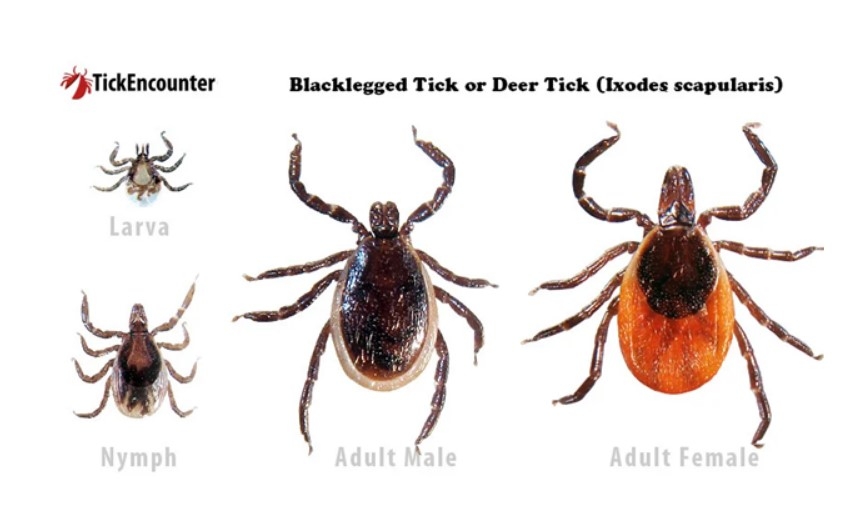
That aside, what crews need to know is that there are 43 species of ticks in Ontario and many of them can be found in and around the GTA. Most species of ticks are of little concern to humans, but a few commonly bite them, including:
Blacklegged Tick (Deer Tick): A tick common in eastern North America, it commonly feeds on white-tailed deer, but it will also bite humans and pets if it comes in contact with them.
However, they are incredibly tiny, which can make them tough to spot. Their larvae are the size of poppy seeds, while adults that have not fed are around the size of a sesame seed. These ticks are a health concern as they can spread many viruses to humans.
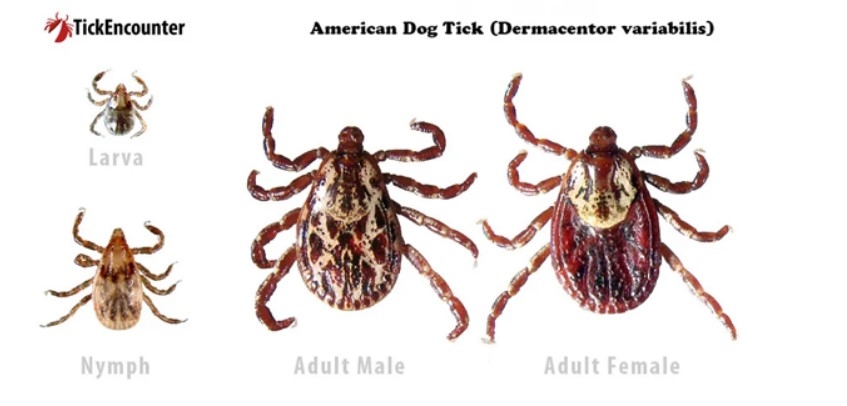
American Dog Tick (Wood Tick): Similar in size to Blacklegged ticks, these ticks are distinguished by their patterned scutum (body). They will bite animals of any size, typically targeting larger hosts as they grow into adulthood. Unlike the other ticks discussed in this article, Dog Ticks do not carry diseases and their bites are simply a nuisance.
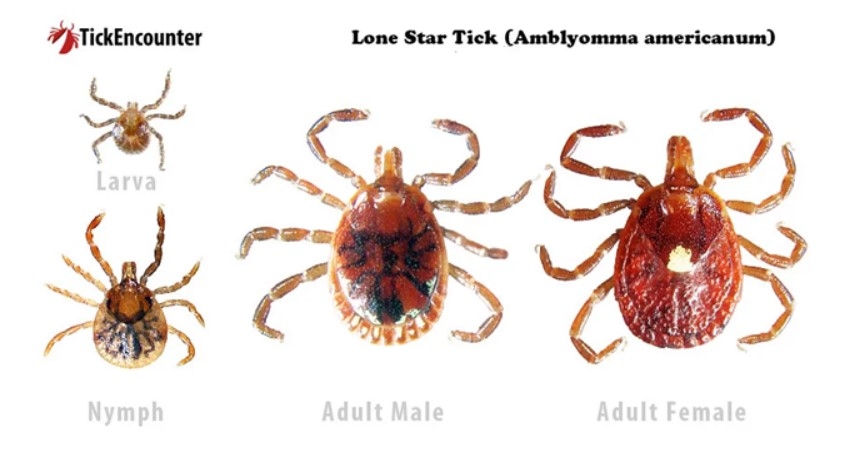
Lone Star Tick: Characterized by their distinct single, light-coloured dot on the scutum of adult females, the Lone Star Tick is an import into Canada. Arriving here on migrating birds, they do not survive Canadian winters.
However, as climate change causes milder winters, there is concern that the lone star tick could establish a breeding population in locations like southern Ontario. Lone star ticks are highly likely to bite humans when given the opportunity. This is a health risk, as, like blacklegged ticks, they carry diseases. Their bite can also lead to a life-threatening allergy to certain meat and dairy products.
What Kind Of Ontario Work Sites Are Ticks Commonly Found In?
Ticks are found in many places, not just in woods. They can be found in urban centers too, such as parks, backyard gardens, and overgrown properties as well as any wooded areas. They prefer tall grass, shrubs, leaf litter and wood piles where they wait for animals to brush against them, allowing them to climb onto their host. Though ticks are most active in the warmer months, they can be active any time the outdoor temperature exceeds 4°C.
As for workplaces, certain environments are more likely to harbor ticks, including construction, demolition, and landscaping sites. That is why crews and surveyors are at higher risk as their jobs frequently expose them to these environments. Employers and supervisors must take every precaution reasonable to protect their workers from the risk of tick bites.
What Are Ticks A Safety Hazard?
Different tick species pose different kinds of health risks. A deep dive into each kind will help employers and workers understand what they are up against:
Blacklegged Ticks
Lyme disease is the number one tick-borne disease in Ontario. Caused by the bacteria Borrelia burgdorferi, which is carried by Blacklegged Ticks and spread through their saliva, Lyme disease can be debilitating without treatment.
Its symptoms include fatigue, fever, swollen lymph nodes, muscle and joint aches and headaches, and large round rashes (erythema migrans). While the “bullseye” rash is commonly associated with Lyme disease, it is only present in certain cases. It is more common for the rash to be uniformly red, which may blister or not at all.
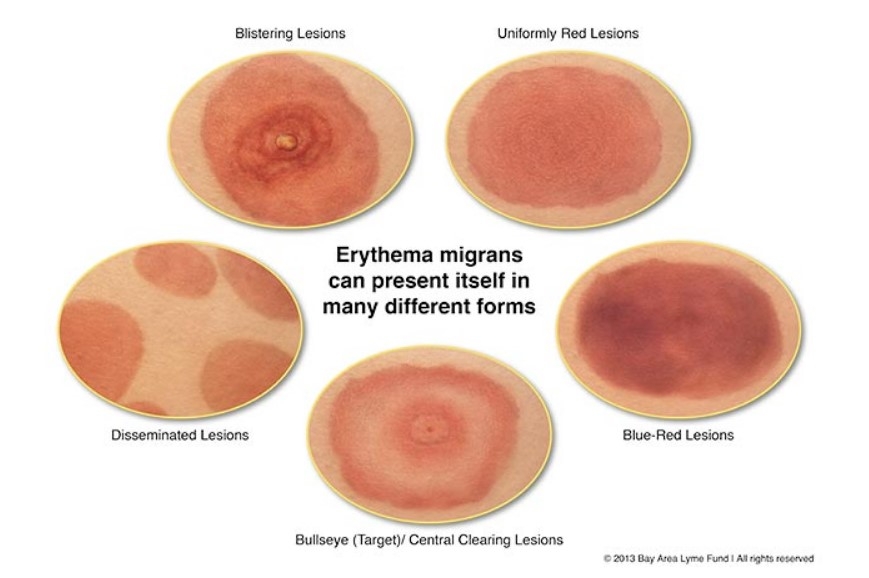
If left untreated, Lyme disease can progress, leading to issues such as facial paralysis (Bell’s palsy), heart palpitations, numbness, difficulty concentrating (brain fog), arthritis, and nerve damage.
Unfortunately, many people with Lyme disease don’t remember being bitten by a tick and may not notice the rash, thus complicating accurate diagnosis. Thankfully, Lyme disease is treatable with antibiotics in both its early and later stages. However, nerve damage caused by the disease is permanent and may lead to lifelong disability.
Blacklegged Ticks can, in rare cases, transmit other diseases too, including:
- Anaplasmosis is a bacterial infection that causes symptoms like malaise, aches and pains, nausea, and vomiting. If left untreated, it can lead to organ failure. In 2023, Public Health Ontario reported 17 confirmed and 23 probable cases of Anaplasmosis.
- Babesiosis is an infection caused by a parasite that destroys red blood cells. Initial symptoms are flu-like, and if left untreated, it can cause hemolytic anemia and organ failure. In 2023, Public Health Ontario reported 8 confirmed and 7 probable cases of Babesiosis.
- Powassan virus disease and infection cause fever, headache, and vomiting. This virus can cause brain inflammation (encephalitis) or meningitis as well. Approximately 20 recorded cases have occurred in Canada between the years 2017 and 2026 so far. Even with treatment, 50% of cases result in permanent neurological problems, memory loss, and muscle wasting.
Lone Star Tick
Lone Star Ticks are not endemic to Ontario. Hence, there is no surveillance system in place for the diseases they can cause.
However, in recent years, the number of Lone Star Ticks reported in Ontario has been steadily on the rise. This is because their range is expanding to cover northern Canada, with climate change causing milder winters in the north-eastern United States.
Lone Star Tick bites can cause infections with similar symptoms to those spread by Black Legged Ticks, including infections such as Ehrlichiosis, Heartland virus, and Bourbon virus. They can also cause a rash similar to the one associated with Lyme disease known as Southern Tick-Associated Rash Illness, and in rare cases, a bacterial infection that causes painful skin ulcers and swollen lymph glands known as Tularemia.
That said, the disease most often associated with Lone Star Tick bites is Alpha-gal syndrome. It is still not known how the bite of this tick causes alpha-gal syndrome, but it can occur with other species of ticks around the world.
The leading theory suggests that the condition arises from the body's immune response to tick saliva, which carries proteins coated in a sugar called alpha-gal. While alpha-gal is naturally produced by many mammals, it is absent in the human body. Consequently, individuals who develop alpha-gal syndrome experience a sudden and potentially life-threatening allergy to animal-derived products containing this sugar.
Alpha-gal syndrome is uncommon in Canada, but in places where Lone Star Ticks are endemic, cases can be so common that restaurants offer special menus for those with alpha-gal syndrome.
People with alpha-gal syndrome must avoid all red meats, including pork, and should stay away from products made of dairy or containing gelatine. It might seem like it’s not a lot to give up, but being fatally allergic to common food items deeply impacts a person’s quality of life – not only because it greatly restricts their food choices, but many pharmaceuticals, including some cancer treatment drugs, contain alpha-gal in the form of gelatine. Alternatives to such medications are very hard to find.
There is no treatment for alpha-gal syndrome, and while some may experience a lessening of the effects, or a disappearance of the allergy with time, for others the allergy remains permanent.
How To Protect Outdoor Workers Against Ticks & Tick-Borne Diseases?
Employers that create a culture of safety by regularly enrolling their crews in relevant courses such as working at heights training, fall protection training, and JHSC training are better equipped to handle the threat of ticks. In any case, the following tips can help in protecting workers against tick attacks:
Elimination controls
- If possible, avoid walking through tall grass, shrubbery, and wooded areas
- Keep grass cut and clear work areas of piles of plant debris, particularly during the warmer months when ticks are most active
Engineering controls
- Provide showers in the workplace so workers can wash off any ticks that may have latched onto them
- Equip work areas with dryers to heat-treat clothes used for work outdoors
Administrative controls
Train workers on the hazards of ticks, safe work practices to avoid them, and first aid for tick bites
Encourage workers to shower as soon as possible after working outdoors and to perform full body tick checks
Put clothes in the dryer on high for at least 10 minutes as soon as possible after working outdoors to eliminate ticks
Include tick removal tools like fine-point tweezers in first aid kits
PPE
Clothing choices can help reduce the risk of tick bites. Encourage workers to wear:
- Light coloured clothes
- Long-sleeved shirts and full-length pants
- Tuck pant legs into socks
- Tuck shirt into pants
- Permethrin-treated clothes can be worn to repel ticks
- Use bug spray with DEET or Icaridin to keep ticks away
- Provide workers with tick removal tools to carry with them in the field.
What To Do If A Worker Has Been Bitten?
If a worker has been bitten onsite, the first thing one should do is remove the tick. Ticks may stay on the body for several days, increasing the risk of infection. Here is a basic step-by-step guide to removing ticks:
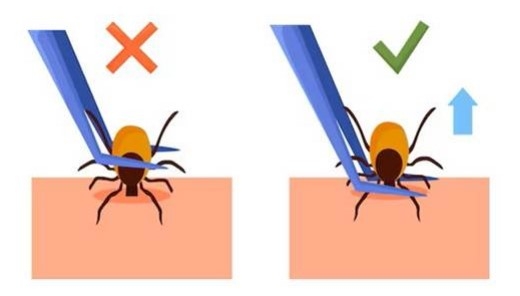
1. Use clean fine-tip tweezers to remove the tick
2. Grasp the tick’s head as close to the skin as possible
3. Slowly pull the tick away from the skin
4. If parts of the tick’s head remain in the wound, remove them with the tweezers
5. If you can’t remove all the parts of the head, allow the wound to heal
Once the tick is removed, wash the wound with soap and water or an alcohol-based sanitizer. Removed ticks can be submitted for identification via a local health unit. Monitor for symptoms and seek medical attention if the worker begins to feel unwell. Inform the doctor that they have been bitten by a tick.
Conclusion
Ticks are an increasing concern in Ontario as climate change expands their geographical range and active periods in the province. Workers must understand the risk and take appropriate control measures to prevent tick bites.
Regular reinforcement of safety practices with the help of professional training can help here. For example, JHSC training can support the creation of tick prevention protocols, while first-aid training can act as the first line of defense against tick bites.
We can help with both courses. Act First Safety, located in Scarborough off Highway 401, provides diverse safety courses to ensure worker protection against a myriad of on-site hazards. Contact us to learn about currently available training programs.
FAQs
Who is at risk of tick bites?
Any worker who works outdoors can encounter ticks. However, crews who work in areas with tall grass and shrubs like forests, rural road shoulders, overgrown properties, and parks, are at a greater risk of encountering ticks.
Will I get sick if I am bitten?
Not all ticks will be infected with bacteria, parasites, or viruses that can be transmitted to humans. If you are bitten, remove the tick, clean the area and monitor for symptoms which may show up a few days to a month after being bitten. Many people who contract tick-borne diseases do not recall being bitten by one, so if you develop symptoms consistent with tick-borne disease, seek medical attention immediately.
Where in the province am I at greatest risk of tick-borne diseases?
Risk level is based on local tick population and if any tick-borne diseases have been detected in the area. Click here to view Ontario’s Tick Map. In any case, it is important to take precautions, even if there have been no reported cases in your area, as ticks can travel on birds and animals that may migrate over large areas.